
Let me tell you a story.
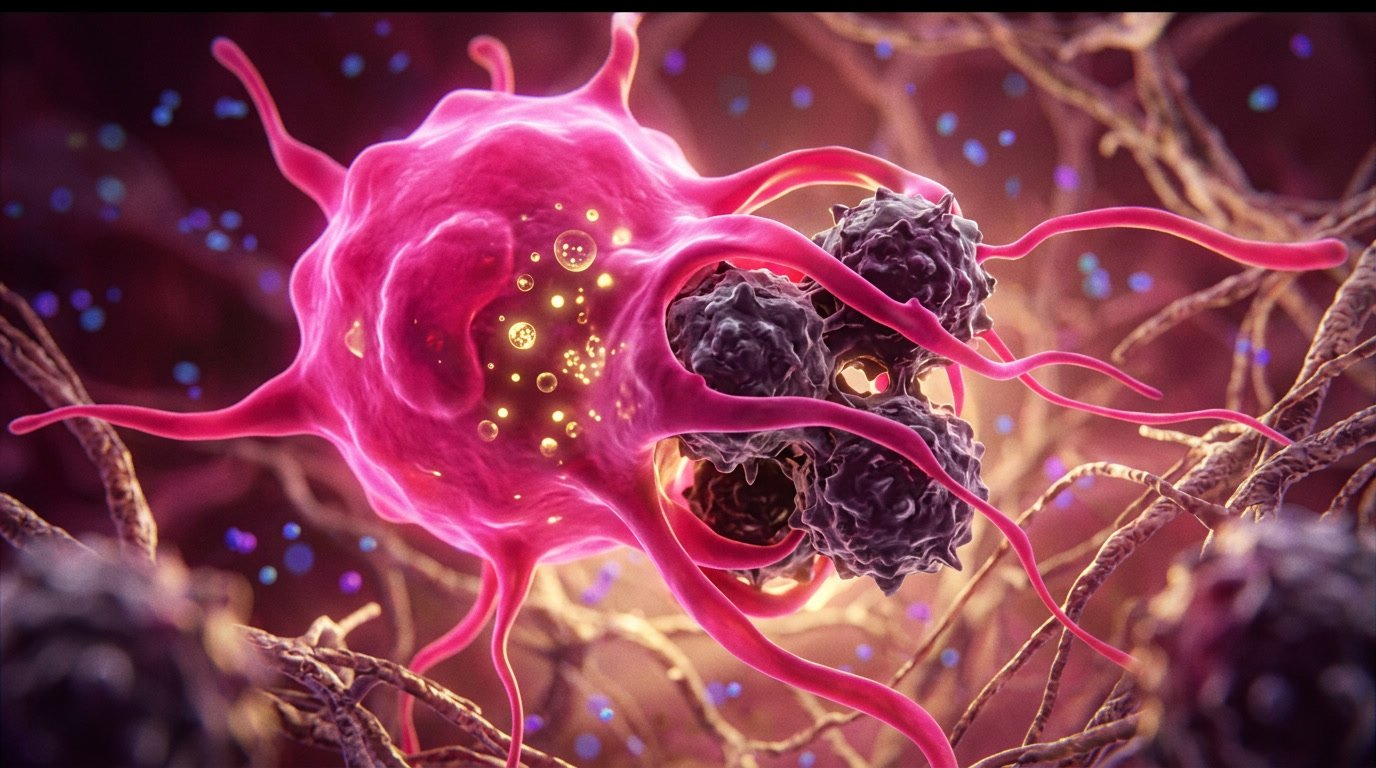
In 2016, a company called Forty Seven spun out of Stanford. It was built on work from Irv Weissman’s lab. The pitch was simple: cancer cells wave a “don’t eat me” flag called CD47 at macrophages. Block that flag, and the immune system eats the tumor.
Gilead bought them in 2020. For $4.9 billion.
The catch? CD47 is also waved by red blood cells. Which meant the lead drug, magrolimab, kept causing anemia in patients. The program was eventually killed in 2024 after a string of failed trials.
So here’s what’s interesting about Pheast Therapeutics.
Same lab. Same thesis. Different flag.
Pheast was founded in 2020 by Roy Maute, Amira Barkal, Ravi Majeti, and yes, Irv Weissman himself. They’re all veterans of the Forty Seven lineage. Their target this time is CD24, another “don’t eat me” signal that works through a receptor called Siglec-10 on macrophages.
The key difference matters. CD47 is everywhere in the body. CD24 is mostly on tumor cells. In ovarian cancer specifically, CD24 expression is 250-fold higher than in normal tissue.
Yesterday at AACR 2026, Pheast presented the first Phase 1a data for PHST001.
Pheast Therapeutics pipeline
PHST001: Advanced solid tumors
Anti-CD24 IgG4 monoclonal antibody · Macrophage checkpoint inhibitor
FDA Fast Track in platinum-resistant ovarian cancer (June 2025). Enrollment up to 80 patients.
What they showed wasn’t headline efficacy data. It was dose-escalation stuff. Linear pharmacokinetics. Dose-dependent receptor occupancy. Pharmacodynamic evidence that macrophages were doing what they’re supposed to do when you block CD24.
And some early signals. Disease stabilization. Some tumor shrinkage. No formal response rates disclosed.
But here’s the thing. When Forty Seven went public in 2018 on their Phase 1 data, it wasn’t response rates that sent the stock flying. It was the thesis that macrophage checkpoint inhibition could work in humans. Phagocytosis data. Receptor occupancy. The biology doing what the biology should do.
Pheast crossed that same threshold with a cleaner target.
FDA Fast Track in platinum-resistant ovarian cancer. $76M Series A from Catalio and ARCH. Phase 1 enrollment continues at up to 80 patients across advanced solid tumors.
The Weissman lab has a pattern. Get the biology right. Publish in Cell. Spin out a company. Get acquired.
One out of one so far.
The Biotech Voyager
Early-stage biotech signals, personalized.
The signals that matter to you. Contextualized and written directly to you. So you cut through the noise and immediately understand why it matters.