For about a decade now, every CNS gene therapy company has had the same conversation with their pharmacology team.
“Can we just deliver this thing IV?”
“No.”
“Why not?”
“Blood-brain barrier.”
“There has to be a way around it.”
“There isn’t.”
The standard workarounds are direct injection (intrathecal, intracisternal, intra-cerebroventricular, intra-thalamic – take your pick) or systemic delivery at doses high enough to saturate the BBB and accept the off-target liver toxicity.
AviadoBio just licensed a third option from Apertura Gene Therapy.
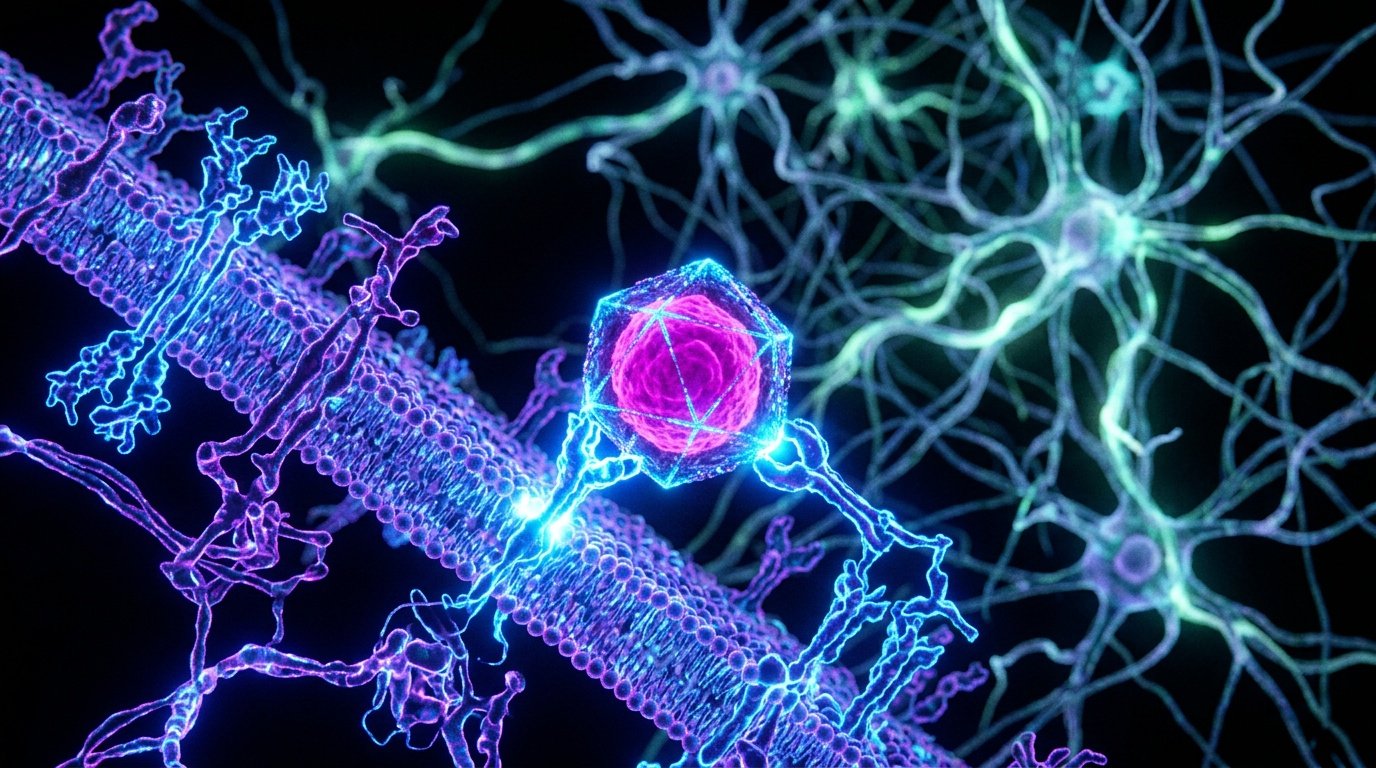
It’s called TfR1 CapX. Engineered AAV capsid that binds the apical domain of human transferrin receptor 1, hitches a ride across the BBB through receptor-mediated transcytosis, and lands in the brain. All without disrupting the receptor’s normal job of moving iron around.
Apertura has been quietly running this experiment for a couple years and the published preclinical numbers are striking.
Over 50% neuronal transduction, 90% astrocyte transduction, at doses 40-fold lower than current CNS-targeted gene therapies. Reduced liver biodistribution in second-gen capsids.
Oh! and they’re mostly resistant to the neutralizing antibodies that limit AAV9 and AAV5.
If half of that translates to the clinic, the BBB problem is partially solved.
CNS gene therapy delivery — by route
Direct injection (intrathecal, intra-thalamic, ICV)
Surgical procedure required · localized distribution
Systemic AAV9 (high-dose IV)
Hepatotoxicity risk · saturating BBB
TfR1-targeted capsid (IV, BBB-crossing)
Receptor-mediated transcytosis · 40× lower dose
AviadoBio’s first program using TfR1 CapX is AVB-406, a preclinical gene therapy for tauopathies including Alzheimer’s. The combination is the company’s vMiX RNAi platform packaged inside Apertura’s BBB-crossing capsid.
The idea is to silence pathogenic tau across the brain via a single IV infusion.
That’s a much bigger ambition than where AviadoBio started.
Their existing lead program, AVB-101, is an intra-thalamic AAV gene therapy for FTD-GRN currently in a Phase 1/2. It requires a stereotactic neurosurgery to deliver. AVB-406 wouldn’t require any surgery at all.
As for the current deal, financial terms weren’t disclosed.
Apertura already has a stack of partnerships – the Broad Institute (prion disease), Galibra Neuroscience, Emugen Therapeutics, and Rett Syndrome Research Trust – so they’re clearly licensing the capsid broadly rather than building everything internally.
This is a pretty smart move for a platform play.
The FDA already gave Apertura a regulatory tailwind that’s worth flagging. Last year, FDA recognized that NHP studies are pharmacologically irrelevant for TfR1 CapX evaluation because the binding is human-specific. That cuts development timelines and costs, and tees up faster IND submissions for any program using the capsid.
So, yeah…BBB-crossing AAV is one of the genuinely unsolved problems in gene therapy. If Apertura’s capsid does what the preclinical data suggests, AviadoBio’s tauopathy program just leapfrogged a lot of the field.
Now we wait for the first IND.
The Biotech Voyager
Early-stage biotech signals, personalized.
The signals that matter to you — contextualized and written directly to you — so you cut through the noise and immediately understand why it matters.