
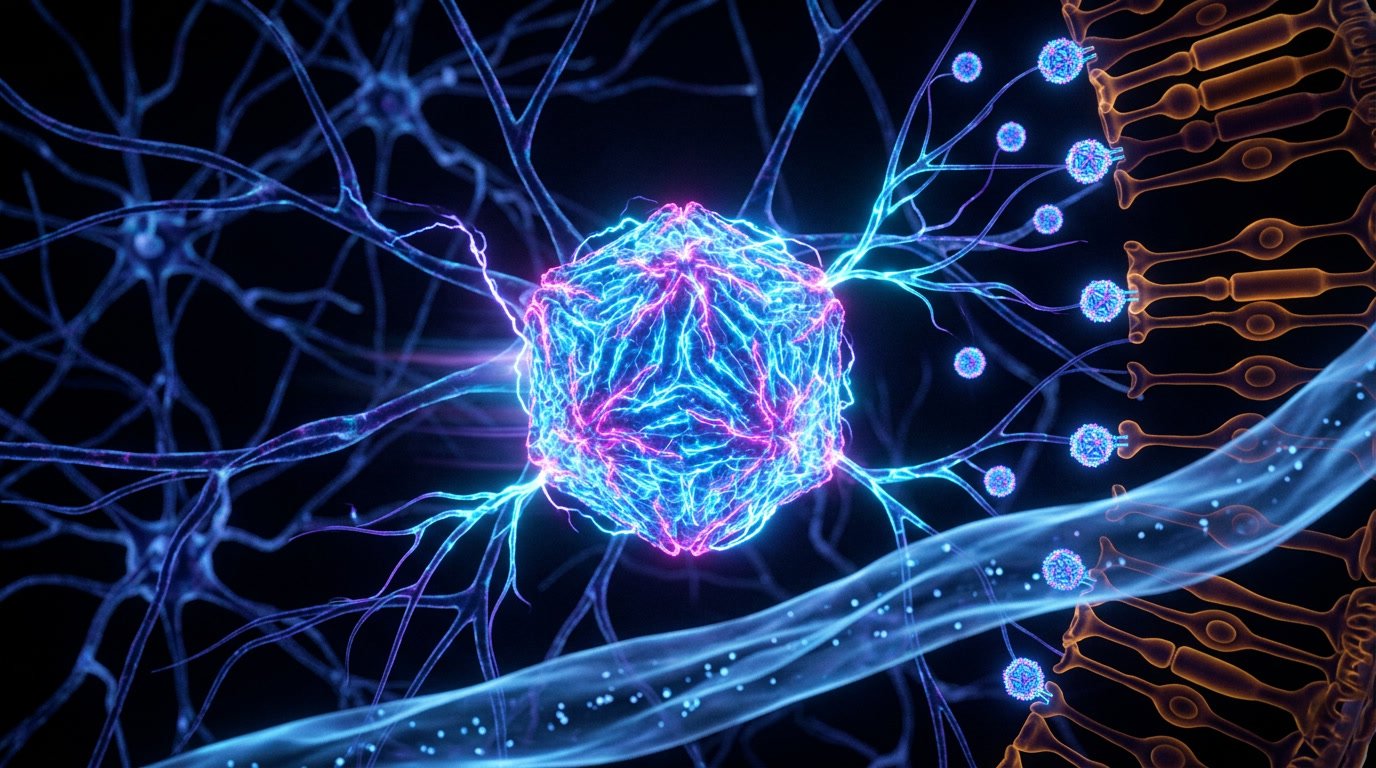
The AAV capsid wars are going to be won by whoever can match a delivery vector to a tissue precisely enough to skip the side effects.
Most companies design capsids the old way:
Pull a wild-type capsid off the shelf, mutate it, screen the mutants in animals, repeat until something looks promising.
Slow, empirical, expensive.
Avista Therapeutics is doing it with AI.
The company announced presentations at ASGCT 2026 and ARVO covering its computationally engineered AAV capsid platform for retinal and CNS diseases. The lead asset, ATX002, is an ophthalmologic gene therapy candidate built on AI-designed next-generation capsids delivered via suprachoroidal injection.
The basic problem with eye gene therapy is that subretinal injections are surgical and risky, intravitreal injections often immune-react, and existing capsids don’t transduce the right cells efficiently from the suprachoroidal space.
If Avista’s AI-designed capsids actually solve that, retinal gene therapy gets dramatically more accessible.
Ray Therapeutics just raised $125M for an optogenetic vision approach. The Beam-out gene editor crowd has been chasing similar problems. Adverum, 4D Molecular, RegenxBio – everyone has retinal capsids in development. Few of them are designed by AI.
The other angle Avista’s bringing to ASGCT is intra-CSF delivery for CNS programs.
That overlaps with what AviadoBio licensed from Apertura today, except Avista is doing it via direct CSF injection rather than systemic IV.
Different bet, same problem.
The Biotech Voyager
Early-stage biotech signals, personalized.
The signals that matter to you — contextualized and written directly to you — so you cut through the noise and immediately understand why it matters.
The competitive question is whether AI-designed capsids actually outperform traditional rational engineering or directed evolution.
It’s been a decade of capsid AI promises and, to date, most of them haven’t translated.
Dyno Therapeutics has a partnership with Roche, Sarepta, Astellas, and others, and the Dyno-designed capsids are working their way toward the clinic but have not produced game-changing human data yet.
Spirovant is doing AI capsid design for cystic fibrosis.
The University of Michigan group spawned a few startups going after similar problems.
What separates Avista’s approach is that they’re integrating capsid design with delivery route optimization – they’re not just designing for cellular tropism, they’re co-designing for whichever route they’re using (suprachoroidal, intra-CSF, etc.).
This “dual optimization” (AAV + delivery method) isn’t something I’ve seen the other “AI vector design” companies do.
For now, the data is mostly preclinical. ATX002 hasn’t entered the clinic. The ASGCT and ARVO presentations will detail capsid engineering methods, biodistribution, and manufacturability – not human efficacy.
The real question for the field is, are we entering a phase where AI-designed capsids start producing clinical data that matters? The first human results from any AI-designed capsid should land in the next 12-24 months. Avista isn’t first to that finish line, but they’re in the race.
One thing’s clear from how the AAV space is evolving: by 2030, any capsid you’d actually want to put in a patient is going to be designed by software. T
he question is who built the best software.
The Biotech Voyager Podcast
Deep dives on the signals shaping early-stage biotech.