I’m going to ask you to suspend disbelief for one paragraph.
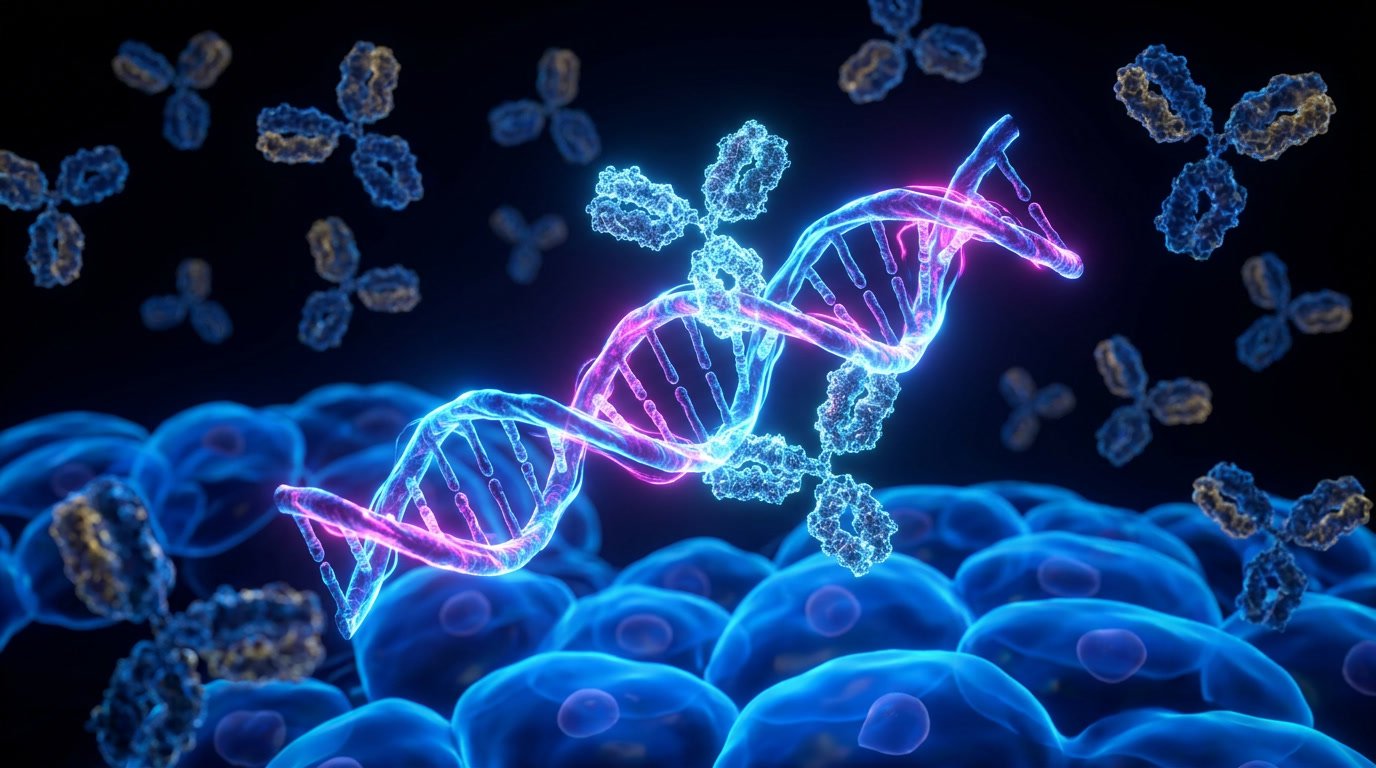
SAB Biotherapeutics makes its drugs in genetically engineered cattle. The cows have been edited to produce human immunoglobulin G instead of cow IgG. You immunize the cow with a target antigen. The cow mounts an immune response. You harvest fully human polyclonal antibodies from the blood.
The whole thing takes about 2 and a half months…Moo!
Yes, really…I just moo’d at you.
The FDA approved five of seven sections of their New Animal Drug Application for this platform in 2023. It’s a real regulatory framework.
And it’s the platform behind SAB-142, a fully human anti-thymocyte globulin that SAB is developing as a disease-modifying therapy for Type 1 diabetes. Not insulin replacement. Not glucose management. Actual preservation of the patient’s own beta cells.
At the IDS 2026 Congress, they presented data from four adult patients with established autoimmune T1D. All four preserved their C-peptide — this is a biomarker showing their pancreas is still making endogenous insulin.
Three were classified as “super responders.”
SAB-142 Phase 1 · Established T1D · Key findings
4 of 4 patients
3 of 4
4 of 4
Source: IDS Congress 2026. Small-cohort Phase 1 data. n=4.
Yes, n=4.
Yes, open-label.
Yes, a very small sample.
But here’s the thing about T1D disease-modification: the reason most attempts fail is that patients with established disease have already lost most of their beta cells. You can’t save what isn’t there anymore. The whole field has shifted toward new-onset T1D because preserving function at day one is so much easier than rescuing it at year five.
SAB-142 showed C-peptide preservation in established disease. That’s the hard version of the problem.
The Biotech Voyager
Early-stage biotech signals, personalized.
The signals that matter to you — contextualized and written directly to you — so you cut through the noise and immediately understand why it matters.
The mechanistic data is what gives the efficacy story some backbone. SAB-142 appears to induce functional exhaustion of CD4+ conventional T cells – the ones that drive the autoimmune attack on beta cells.
Rabbit ATG (Thymoglobulin) has been used off-label for T1D for years with mixed results, but it’s an animal-derived polyclonal and it comes with immunogenicity, serum sickness, and the whole cascade of problems that come with non-human proteins.
SAB’s Phase 1 reported no serum sickness and no anti-drug antibodies at the target dose. Because the antibodies are fully human. Because they came from cows engineered to only make human IgG.
That’s the pitch.
The field context is rich. T1D is going crazy lately:
- Sana Biotechnology has UP421 at 14 months of insulin-independence in a first-in-human islet transplant without immunosuppression, and SC451 (their hypoimmune-modified islet therapy) is IND-ready for 2026.
- GentiBio dosed the first patient in their Phase 1 of their engineered antigen-specific Treg therapy for new-onset T1D back in March.
- Vertex has zimislecel (formerly VX-880), Phase 3-ready islet cell therapy.
SAB is taking a different path. They’re not trying to replace the beta cells. They’re trying to stop the attack. And they’re using a platform that can produce multi-epitope polyclonals that behave like a whole immune response, not a single monoclonal antibody.
The company has some runway.
They closed a $175M oversubscribed private placement in July 2025 with Sanofi as a strategic investor. Cash position of $161.5M as of September 2025, runway through 2028. The registrational Phase 2b SAFEGUARD trial is enrolling in the US, Australia, and New Zealand, with data expected in 2H 2027.
The hard part isn’t whether SAB-142 can preserve beta cell function. Four patients just showed it can, even in established disease. The hard part is whether that effect is durable, whether it’ll scale to the full Phase 2b cohort, and whether the platform can actually become a standard way to make drugs.
Weird platforms sometimes win…go talk to the folks at Cirsium (AAV in tobacco plants).
SAB keeps giving you reasons to believe this one might.